Tracing a leak without opening up the whole wall
Sources checked on 30 August 2026
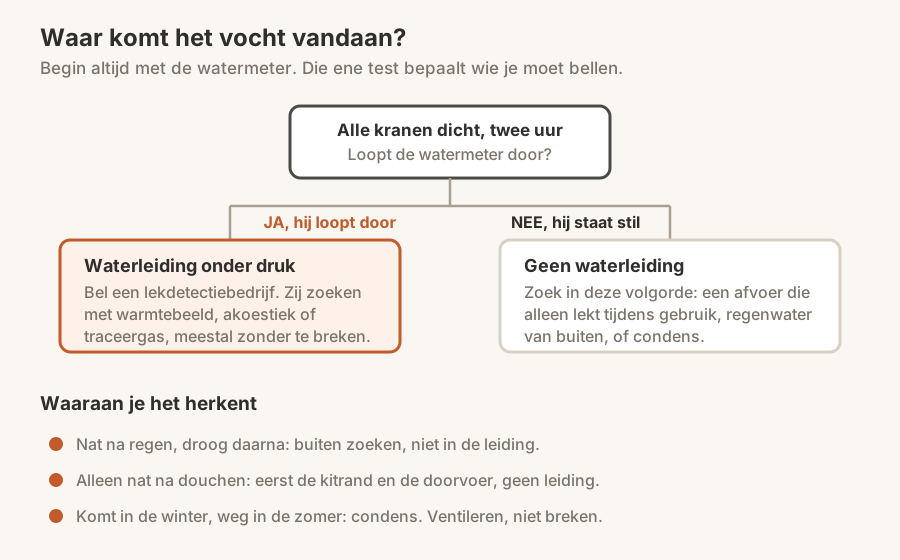
First rule out where it is not coming from: close every tap and read the water meter again two hours later. If it moved, it is a pressurised water pipe. If it stands still while the patch stays wet, it is rainwater, condensation or a drain. A leak detection company uses thermal imaging, acoustics or tracer gas and usually finds the leak without breaking anything. Expect 200 to 450 euro for the tracing; the repair comes on top. Water damage is often insured, repairing the pipe itself usually is not.
Rather have it done?
Post your job for free. Plumbers near you respond with their own price and you choose. Your money stays safe until you approve the work.
The water meter test, and why it comes first
Close every tap, switch off the dishwasher and the washing machine, and note the meter reading to the last decimal. Come back two hours later without using water in between. If the reading changed, you are losing water from a pipe under pressure.
If the meter stands still and the damp patch still grows, it is not a water pipe. Then you look elsewhere: a drain that only leaks while water runs through it, rainwater entering along a window frame or a roof penetration, or condensation against a cold wall.
This distinction is half the work and it costs you two hours and nothing else. A leak detection company starts with exactly the same question, so if you already have the answer you are cheaper off.
What does leak detection cost in 2026?
Leak detection costs between 150 and 500 euro, and almost all of that difference is the method needed. A leak that a thermal camera shows in ten minutes is a different bill from a pipe that first has to be emptied and filled with tracer gas.
Note what is NOT included: this is the tracing only. Opening up, repairing and closing again are separate, and under a tiled floor that is quickly the largest part of the bill.
| Method | Cost | When it is used |
|---|---|---|
| Visible leak, no equipment | 50 to 75 euro | When the spot can already be pointed out |
| Thermal imaging or acoustic | 150 to 400 euro | Most common, for damp in a wall or floor |
| Roof leak detection | 75 to 150 euro | 300 to 400 euro on a complex roof |
| Tracer gas | 400 to 500 euro | When the other methods turn up nothing |
| Repair afterwards | 50 to 90 euro per hour | Plumber rate, plus materials |
Detection only. Opening up, repairing and closing again are separate.
The water meter test, step by step
This test costs you two hours and nothing else, and it decides whether you need a leak detection company or a roofer. A leak detection company starts with exactly the same question, so if you already have the answer you are cheaper off.
- Close every tap and switch off the dishwasher and the washing machine.
- Note the water meter reading to the last decimal. Photograph it, then you cannot copy it down wrong.
- Use no water for two hours. Do not flush the toilet either, because the cistern refills afterwards.
- Read the meter again and compare.
- If the reading changed, a pressurised pipe is leaking. Call a leak detection company.
- If the meter stands still while the patch stays wet, it is not a water pipe. Then look in this order: a drain that only leaks during use, rainwater from outside, and condensation.
- If in doubt, close the main tap and repeat. If the meter still runs, the leak is before the meter and it is the water company's problem.
What a leak detection company does
Thermal imaging is the most common method. Warm water in a pipe shows against the colder floor or wall, even through tiles. It works well with underfloor heating and hot water pipes, and less well with cold water in a well-insulated floor.
Acoustic detection listens for the sound water makes as it sprays from a small hole under pressure. With a sensitive microphone that is audible through concrete. It only works on pipes under pressure, so not on a drain.
Tracer gas is the heaviest method: the pipe is emptied and filled with a harmless gas mixture that rises through the floor at the leak. That is what remains when thermal imaging and acoustics find nothing, and it is also the most expensive.
Ask in advance what happens if they do not find the leak. Some companies then charge only the call-out, others the full rate. That difference is hundreds of euro.
What it costs
Leak detection itself usually costs 200 to 450 euro, depending on the method and how long it takes. That is only the tracing; opening up, repairing and closing again are separate.
For the repair itself, count on a plumber's rate of 50 to 90 euro per hour plus materials, and on restoration of tiles or plaster if anything had to be opened.
In an emergency where the water cannot be stopped, the same evening and weekend surcharges apply as with other plumbing emergencies. If you can close the main tap and do without water for a while, waiting until morning saves a lot.
What your insurance does and does not cover
The main rule with most Dutch buildings and contents policies: the DAMAGE caused by the water is covered, REPAIRING the pipe is not. A soaked floor is reimbursed, the new coupling in the pipe is not.
The cost of tracing is often included, precisely because you cannot limit the damage without it. That differs per policy and it is usually stated literally under tracing costs. Call your insurer before you give the order, not after.
Slow leaks you have let run for months are regularly rejected because you should have limited your damage. A damp patch that keeps growing is not something to watch for another season.
Where it usually is
With a damp patch on a ceiling below a bathroom, the sealant around the shower tray or the drain penetration is the first suspect, not the pipe. That is good news: sealing is an hour's work.
With a wall that is only wet after rain, look outside: a blocked gutter, a crack in the pointing, a broken roof tile or loose lead flashing. A leak detection company for water pipes is then the wrong company.
Patches that appear in winter and disappear in summer are often condensation rather than a leak. The answer is ventilation and insulation, not demolition.
Done reading?
Describe the job in two minutes. Plumbers respond with their price, you compare and choose. Free, with no strings attached.
Post your job for freeFrequently asked questions
Can I trace a leak myself with a thermal camera?
A cheap phone attachment does show temperature differences, but the resolution is too low to tell a pipe under a floor from a cold bridge. You do not need one for the water meter test, and that often says more.
How long does leak detection take?
Usually one to three hours. If tracer gas is used, the pipe has to be emptied and dried first, and it runs to half a day.
Does something always have to be broken open?
No. The whole point of leak detection is that one spot has to be opened instead of the full length of the pipe. A good company pinpoints it to within tens of centimetres.
Does my insurance cover the tracing costs?
Often yes, under tracing costs, but it differs per policy. Call your insurer before you give the order; reporting afterwards is the most common reason a valid claim is still rejected.
My water meter stands still but it stays wet. Now what?
Then it is not a pressurised pipe. Look in this order: a drain that only leaks during use, rainwater from outside, and condensation. Leave the patch for a week and see whether it grows with rain or with cold weather.
What is the difference between leak detection and a sewer inspection?
Leak detection looks for water escaping where it should not, usually from a pressurised pipe. A sewer inspection runs a camera through the drain to find blockages, breaks and root ingrowth. Different equipment, different company, different price.
Sources
Every claim on this page comes from one of these sources. They were checked on 30 August 2026. Legislation changes, so check the source itself if anything matters to you.
- Dutch Association of Insurers, water damage in home insurance
- Consumentenbond, water damage and buildings insurance
- Dutch government, which costs are for the tenant and which for the landlord
- Homedeal, cost of leak detection
- Trustoo, hourly cost of a plumber
- Loodgieter.nl, drainage and leaks
- Milieu Centraal, ventilating your home (Dutch)
- MyGo, cost of leak detection 2026
- Lekdetectie.nl, cost of leak detection
- Murenvochtig, leak detection: cost, cause and solution
Tools for your own address
Three things you can check here for free that you will not find like this anywhere else. They run on open data from the Dutch Land Registry, the buildings register and the national energy agency, so the answer applies to your house and not to an average.
This is not legal advice
We set out what the rules say and where they are. Your situation may differ, and in a dispute your own contract, your deed of division or your local council's bylaw takes precedence. If you cannot work it out, Het Juridisch Loket, the Huurcommissie or a lawyer can help.