The minor repairs decree: which repair do you pay, and which does your landlord?
Sources checked on 30 August 2026
Small, cheap repairs inside the home fall to the tenant, large and expensive maintenance to the landlord. That is set out in the Besluit kleine herstellingen, the annex to article 7:217 of the Dutch Civil Code. Three things take a job off that list: it involves significant cost, you cannot reach it safely or without trade skills, or the repair became necessary because the landlord left a defect unfixed. In those cases the landlord pays after all.
Rather have it done?
Post your job for free. Handymen near you respond with their own price and you choose. Your money stays safe until you approve the work.
The main rule in one sentence
As a tenant you are required to carry out the minor repairs yourself. That is article 7:217 of the Dutch Civil Code, and exactly which repairs those are is listed in the annex to the Besluit kleine herstellingen. Anything not on that list is a defect the landlord has to fix.
The thinking behind the list is simple: it covers work an average tenant can do themselves or have done at limited cost. Replacing a bulb, oiling a hinge, clearing a drain. The moment tools, trade skills or a bill of any size are involved, it drops off.
What is on the list, per place in the house
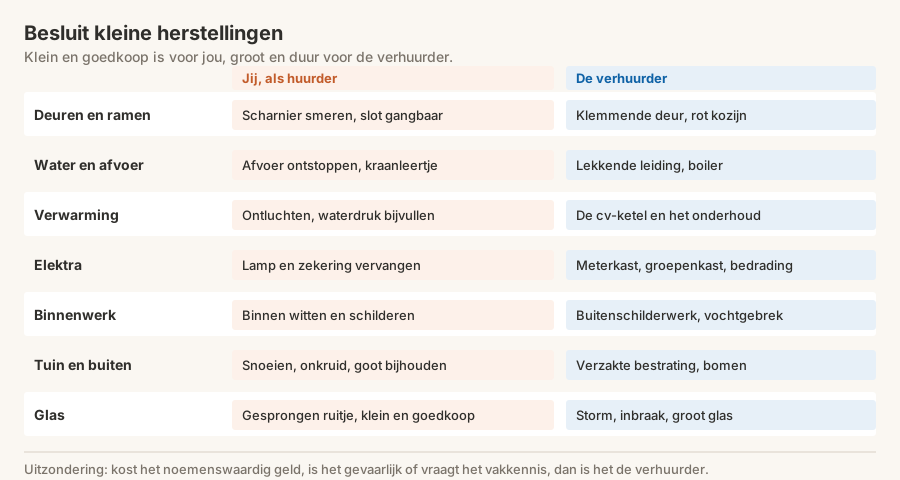
The legal annex is a list without headings, which is exactly why nobody reads it. Below is the same content, ordered by where you are standing when it goes wrong.
This table is meant for looking up your own job. If your case is not in it, use the three exceptions further down: they decide more often than the list itself.
| Where | Tenant pays | Landlord pays |
|---|---|---|
| Doors and windows | Oiling hinges, keeping locks working, cutting a spare key, draught strips | A door jamming from subsidence, rot in a frame, failed double glazing |
| Water and drains | Clearing drains and traps, replacing a tap washer, replacing the shower hose | A leaking pipe inside the wall, a broken water heater, sewers outside the home |
| Heating | Bleeding radiators, topping up the pressure, the thermostat battery | The boiler itself, the annual service, a leaking radiator |
| Electrics | Bulbs and fuses, a switch or socket with a loose cover | The meter cupboard, the consumer unit, wiring in the wall, the earth leakage switch |
| Interior | Painting and whitewashing inside, filling small holes in plaster | Exterior paintwork, damp and mould caused by a structural defect |
| Garden and outside | Ordinary garden upkeep, pruning, weeding, a gutter you can reach safely | Subsided paving, a fence owned by the landlord, felling trees |
| Glass | Replacing a cracked pane, as long as no significant cost is involved | Storm and burglary damage, a defect in the building, anything expensive |
The three exceptions that decide it most often
The list is not the last word. The law contains three ways out, and in practice they decide more often than the list itself. Tenants who know them usually win the argument with their landlord without a row.
First: significant cost. At several points the law states that something falls to the tenant only for as far as no significant cost is involved. What counts as significant is not defined, and that is exactly the room you are standing in. A small pane in an internal door is not the same as a full-height window three floors up.
Second: danger and trade skills. Repairs you cannot carry out without danger, without significant cost or without specialist knowledge fall outside your duty. You change a bulb in a normal room yourself; a fitting six metres up a stairwell you do not.
Third, and this is the strongest: if the repair became necessary because the landlord left a defect unfixed, it is their bill, even when the job itself is on the list. A trap that blocks is your job; a trap that blocks because the waste pipe has subsided is not.
This list cannot be changed to your disadvantage
For self-contained housing this is mandatory law. If your tenancy agreement says you also pay for boiler servicing, exterior paintwork or replacing the water heater, that clause is void for as far as it departs from the decree to your disadvantage. You are not bound by it, even though you signed.
The other way round is allowed: a landlord may take on more than the law requires. Many housing associations do exactly that, through a service package or a maintenance subscription. So always check whether your landlord has a broader arrangement before calling out an engineer yourself.
If you are unsure whether something counts as a defect, report it to your landlord in writing and keep that report. If nothing happens within six weeks, you can go to the Huurcommissie for a ruling on rent reduction for maintenance defects.
What to do if your landlord disagrees
Always start in writing, even if you would rather phone. A message or an email is enough; what matters is that it carries a date. Describe what is broken, when you noticed it, and that you are asking them to fix it.
Photograph everything before you clear up or board anything over. Almost every later argument is about how the damage happened, and that can no longer be proven once the pieces are gone.
If it stays quiet, the Huurcommissie is the next step, and for tenants of self-contained housing it is inexpensive. Meanwhile you can simply find someone to do the repair; who ends up paying is a separate question.
Done reading?
Describe the job in two minutes. Handymen respond with their price, you compare and choose. Free, with no strings attached.
Post your job for freeFrequently asked questions
What exactly falls under the minor repairs decree?
Small, cheap maintenance jobs inside the home that an average tenant can do: replacing bulbs and fuses, clearing drains, bleeding radiators, oiling hinges, painting indoors, ordinary garden upkeep. The full list is in the annex to the decree. Anything not on it is a defect the landlord has to fix.
Can my tenancy agreement depart from the minor repairs decree?
Not to your disadvantage. For self-contained housing this is mandatory law: a clause taking on more maintenance than the decree prescribes is void for that part. You are not bound by it, even if you signed the agreement. The other way round is allowed; a landlord may take on more.
What does significant cost mean in the decree?
The law names no amount. At several points it says something falls to the tenant only for as far as no significant cost is involved, and that line depends on the job and the home. The working rule in practice: if you can solve it with tools from an ordinary drawer and a trip to the DIY store, it is your job. If a tradesperson has to come out with an invoice of any size, it is not.
Who pays for boiler servicing in a rented home?
The landlord. The boiler itself, the annual service and its replacement are not on the list of minor repairs. What is yours: bleeding the radiators, topping up the water pressure and replacing the thermostat battery. If your contract says you pay for servicing, that clause is to your disadvantage and therefore not valid.
I broke something myself, does the list still apply?
No. Damage caused by you or your visitors is yours regardless, even when the repair itself is not on the list. That follows from your duty to use the home as a good tenant. Do report it, because your liability or contents insurance often covers it.
My landlord will not repair, what can I do?
Report the defect in writing first and keep that report. If nothing happens within six weeks, you can start a maintenance defects procedure at the Huurcommissie, which can reduce the rent temporarily until the defect is fixed. You can have the repair carried out in the meantime; that is separate from who ultimately pays.
Sources
Every claim on this page comes from one of these sources. They were checked on 30 August 2026. Legislation changes, so check the source itself if anything matters to you.
Tools for your own address
Three things you can check here for free that you will not find like this anywhere else. They run on open data from the Dutch Land Registry, the buildings register and the national energy agency, so the answer applies to your house and not to an average.
This is not legal advice
We set out what the rules say and where they are. Your situation may differ, and in a dispute your own contract, your deed of division or your local council's bylaw takes precedence. If you cannot work it out, Het Juridisch Loket, the Huurcommissie or a lawyer can help.